
A little about Mongolia
Mongolia is an independent country, a democracy bordered by Russia and China. There are other regions where Mongolians live, which with modern borders are now in Russia and China. At one time, of course, all of those areas were within the Mongol empire under Genghis Khan and his successors. In fact it was the largest contiguous empire in history (the British Empire was larger at its peak, but not contiguous).
The nomadic life
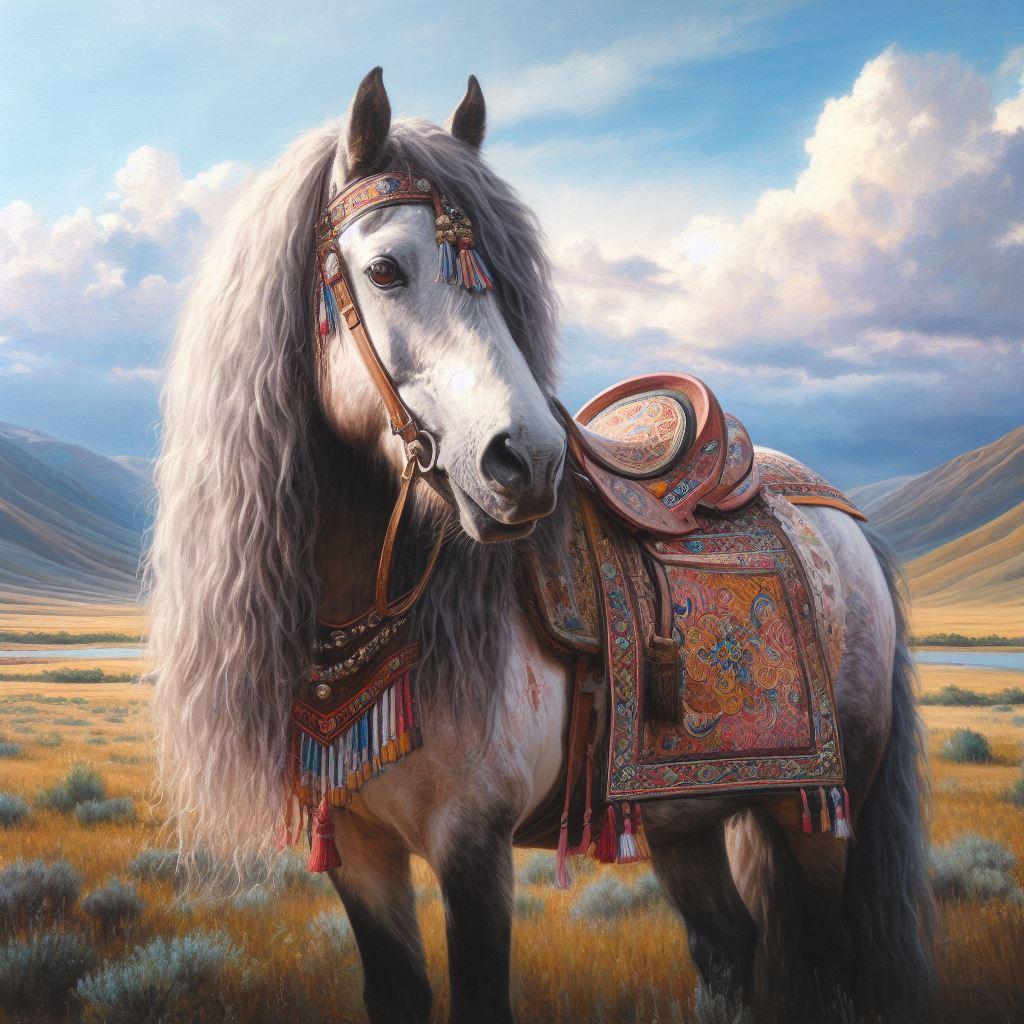
Mongolia's traditional nomadic culture is the epitome of freedom. A family chooses to set up their portable home somewhere to graze their animals, and then moves according to grass and seasons. They herd mainly sheep, goats, horses and camels, and there are also cows, pigs and yaks. These animals provide sustenance in the forms of dairy, meat, wool and pelts (with the short growing season, animal husbandry and meat is crucial). They ride horses to round up herds, to go hunting and to play sports such as racing and mounted archery. Nomads are mostly self-sufficient, and some have moved into the modern era with use of motor vehicles, solar panels and even satellite dishes on their homes!
Music
Mongolian music is a wonder. The horse-head fiddle has a sound that moves you. Often, musicians play a rhythm that evokes a horse's gait, and at other times the sound can be mournful. Throat singing, which has now influenced sound tracks of films and television worldwide, is pure magic: one person vocalizes two or even three notes at once! The singers accomplish this by training in how to create resonances in their bodies. There are many styles of Mongolian music, from folk and opera to pop and heavy metal!
Art and medicine
Mongolia has a beautiful tradition of handicrafts and high religious art, held in homes, museums and monasteries, while modern Mongolian artists develop new styles and techniques. Traditional Mongolian and modern Western medicine likewise coexist, each contributing to health.
Festivals
There are large and small festivals, the most famous of which is Naadam, where, with much pomp, participants compete in horse racing, wrestling and archery.
The land
Geographically, Mongolia has great variety. There are mountain ranges such as the Altai, crowned by Khuiten Peak at 4,374 meters / 14,350 feet. One of Asia's largest freshwater lakes, Lake Khovsgol, is a beautiful destination. In other places there are rivers, a salt lake and hot springs. There are vast grasslands, forests, semidesert and the Gobi Desert, where many dinosaur remains are still being found. Mongolia is larger than France, Spain and Germany combined, yet its population is only 3.3 million people.
Cashmere and textiles
Buying cashmere goods from Mongolia directly supports local families. After winter, cashmere goats are hand-combed to remove their shedding undercoats. Companies such as Gobi Cashmere have traceable sourcing from around 3,000 herding families, and Erdenet Cashmere is another local producer of high-quality cashmere goods. Participating in the Sustainable Fibre Alliance, Goyol Cashmere creates luxurious clothing and accessories. They even make sweaters for dogs! We encourage you to shop sustainably and not for “fast fashion”, it is better to purchase a few select items of high quality that you will use for many years.
In addition to Mongolia's luxurious goods made from cashmere or sheep's wool, one can also find fantastically soft camel hair coats, toasty-warm sweaters and accessories made of yak down, and beautiful slippers made from felted sheep's wool. Be sure to visit the local stores from a variety of brands, and remember to leave space in your luggage for delightful finds for yourself and others! You can also find shopping links on our Get Involved page.
Ulaanbaatar
The capital is modern, with high-rises, city traffic, and local and international cuisine at hotels and restaurants. The Mongolian language is distinct from its neighbors, many young people speak English or other foreign languages, and the culture is welcoming.